Sunday, July 19, 2015

Wednesday, July 15, 2015
Project 14
Project 14 was a collaborative project between Daphnie
Pugh, Brittany Stanchio, and Amber Warren. Below are shareable links of our
Project Overview, Project Calendar, Individual Performance, and Group Project Performance
Rubrics.
Monday, July 13, 2015
Project 13
Project 13 was a collaborative project between Daphnie
Pugh, Brittany Stanchio, and Amber Warren. Below are shareable links of our
Project Overview, Project Calendar, Individual Performance, and Group Performance Rubrics.
Project Overview
Project Calendar
Wednesday, July 8, 2015
Sunday, July 5, 2015
Blog 13
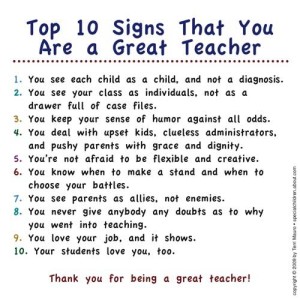
Read the articles below. Write about what makes a good teacher. Explain the ways you plan on using these tools.
Prepare the Path
What are the qualities of a Good Teacher
ABC News- What Makes Great Teacher
What Makes a Good Teacher?
This blog also reminds me as of an article that I read in EDU 346, in that article it states that there’s no such thing a good teacher but a teacher can have good teaching skills. That’s the same thing Engelbrechtis stating in her blog. Student need teachers who have sensitivity to all the ways in which life experiences can be re- expressed by children. A good teacher needs to bring a fine blend of strength and delicacy to her job. She needs to be a person who is secure within herself that she can function with principles rather than prescriptions, that she exert authority without requiring submission, that she can work experimentally but not at random, that she can admit mistakes without feeling humiliated. This blog informed me on more ways to develop good teaching strategies.
My last and favorite quote from her article is that ”I think a good teacher helps students more by helping them experience what they will really experience on their path through life - problem-solving, figuring it out, failing, trying again, failing some more, and trying some more.”
Wednesday, July 1, 2015
Blog 12
There are many useful Assistive technology tools that I can
use in my classroom. Every student that goes to school have different needs.
Some students may not be able to hear well or see well. That’s why it is useful
to know about the different Assistive technologies available for students with
disabilities to use.
For instance, apple
I-Pads are very useful to have while teaching a vision impaired student. Apple
I-Pad has a Voice-over control that speaks before you click on an app. It also
has shortcuts that are easy to remember which help vision impaired students
access the I-Pad without having to look at it. There are also some great apps
that you can download that are easily accessible for visually impaired people.
One app that I thought would be very useful is called Ever-note. It supports
Voice-over and can store voice notes and text so they can be accessed over any
device. Another great app that can be used by the visually impaired is LookTel
Money Reader. LookTel Money Reader allows you to take a picture of paper money,
and tells you what the monetary value of that bill is. To find out some more
useful apps check out this link. http://appadvice.com/applist_ipad_client_view/apps-for-the-visually-impaired

Braille Note Takers are another useful tool for the visually
impaired. Braille Note Takers can help the visually impaired student type up
documents using a braille keyboard. This product can connect to your computer
using a USB port. I think this is a very helpful product because visually
impaired people can easily tell which letter is which, and it allows them to
type up documents for school or work. Find out more about Braille Note Takers
at this link. http://www.humanware.com/en-usa/products/blindness/braillenotes
Many children who wear hearing aids still have difficulty
hearing and understanding a parent or teacher’s words when there is lots of
background noise and over short distances. This communication challenge also
applies to many normal-hearing children who suffer from concentration-related
disorders. A useful tool that can be used in the classroom to help solve this
problem is a personal frequency modulation system or an FM system. FM amplifier
is an interesting tool that helps eliminates background noise and transmits
sounds directly to the student’s hearing aid.
A personal frequency modulation system consists of a transmitter
microphone that the speaker wears, and a pair of headphones that receives the
information the speaker is saying. This is useful if you have a hearing
impaired student, or a student who has trouble concentrating with noise in the background.
The child hears the speaker’s words directly in their ears, without any
distracting background noise, allowing them to enjoy and participate fully in
every conversation. I think this is a great way to include every student even
if they have a disability. http://www.asha.org/public/hearing/FM-Systems/

Sunday, June 28, 2015
Blog 11
Back to the Future by: Brian Crosby
Throughout the video Brian Crosby did a great job at explaining ways on incorporating project based learning in the classroom. The survey was a great way to evaluate students. After all his explanations and projects students were able to answer the same following questions from previous survey. I plan on using this method as a tool to evaluate student's active learning. He also demonstrated that all students have schema, it's just not the same middle class background that most teachers have. As teachers we can provide our students with the schema they need with hands on, real world experiences in the classroom. Brian created a learning environment that was fun and creative to all students. Great video!
Blended Learning by: Paul Anderson

I thoroughly enjoyed listening to Paul Anderson explain the ways he incorporated blending learning cycle in his classroom. I plan on using this same acronym Quivers (Qu- question, I- investigation/ inquiry, E- elaboration, R- review, S-summary) with science lesson and many more lessons. It's a great tool to use to monitor student's progress before moving to the next step, and also a great time for teachers to give one on one feedback to each student.
Making Thinking Visible by: Mark Church
Mark Church shared the importance on the depth of students thinking and reasoning. He explained that students can use real life experiences to make connection with lesson to help students understand.
Building Comics by: Sam Pane
Clever! This is a great example of project based learning. Sam Pane challenged the students to be creative in making a superhero using the information they received. This also was a great way to capture students' attention by incorporating things that are familiar to students.
Project Based Learning by: Dean Shareski
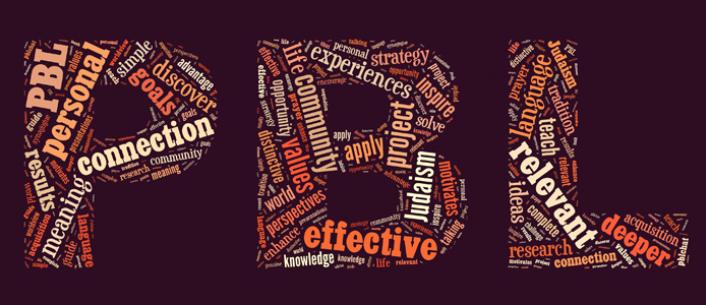
I love PBL! Project Based Learning (PBL) can be an effective tool on ways to motivate students. PBL helps teachers to provide quality feedback for students. Also, technology and PBL enhance learning significantly.
Roosevelt Elementary's PBL Program
Awesome video that goes in depth on the meaning and benefits of PBL.
What is project based learning PBL?
- In depth learning
- Integrated thematic instruction
- Based on "real world" problems
- Research- based
- Project and presentation
Benefits of project based learning PBL.
- Provides different ways of learning
- incorporates real-world solving
- Requires public speaking and takes the fear away st young age
- Problem solving
Wednesday, June 24, 2015
Blog 10
Wow! I am so amazed and fascinated by the ways Ms. Cassidy integrated technology into her classroom. I always knew
that you could integrate technology, but I never thought about having the
students create a blog, Skype, or play Nintendo DS. She created a classroom where
the students were confident in their work and eager to share. I was amused when one of her students said, "Always be careful what you write and say on your blog." After
this comment, I realized that the students valued their work, their comments, and the amount of views they received from others. This was a great tool for parents,
students, and teachers to navigate students improvements by viewing each blog post.
To
see Ms. Cassidy use Skype in the classroom was a shocker to me. This made me
realize I need to catch up with modern day technology. I enjoyed seeing the
students conversing with other peers and teachers. Using this tool is a great
way to receive feedback and advice on ways to improve and give ideas on new
material. This is also a great way to help students gain confidence in public
speaking and listening skills.
I
always thought that Nintendo DS were only used to play video games. This
activity was an awesome way to capture students’ attention in a way that is
familiar to them. Ms. Cassidy explained that this also helped students learn how to share with others.
From
this video I learned that technology can be integrated in the classroom in a variety
of ways to capture the students’ attention. I also learned that
there are numerous ways to integrate technology other than showing a video,
playing games, or using a smart-board. I look forward to using Ms. Cassidy’s
tools in my future classroom, I thoroughly enjoyed watching this video.

Sunday, June 21, 2015
Blog 9
After reading the first required section Seven Essentials for Project Based Learning I learned the differences between busy work and
the effective way to do a project based learning activity. In the article John
Larner and John R. Mergendoller, states, “A classroom filled with student
posters may suggest that students have engaged in meaningful learning. But it
is the process of students' learning and the depth of their cognitive
engagement rather than the resulting product that distinguishes projects from
busywork.” For teacher to have an effective and meaningful project first students must perceive the work as
personally meaningful, as a task that matters and that they want to do well. Second,
a meaningful project fulfills an educational purpose. Well-designed and
well-implemented project-based learning is meaningful in both ways. Along with
making the project meaningful there are seven steps to project based
learning. The seven steps are: Need to
know, Driving Question, Student Voice and Choice, Skills, Inquiry and
Innovation, Feedback and Revision, and Present. During the seven process the
students will learned the important things in project in the process of
completion.
In
the second video Project Based Learning for Teachers
Tony Vincent explains project based learning as having students working over an
extended period of time answering a driving question. The questions are deep and
requires students to complete and end product to share their learning. In this
video Tony states the students will learn collaboration skills, communication
skills, critical thinking skills, and career and life skills. Students take
charge of their learning. After watching
both videos I learned that it’s important for the students to have a voice and
choice in their learning during project based learning.
Three additional videos
After the video these are some of the reasons the
students discuss in the video.
- Give praise on completion
- Recognition
- Career plans
- Parents
- To stay out of trouble
In the video the students
explained ways teachers gave rewards for good behavior.
· Money
buckets
· Brownie
points
· Food
· School
supplies
· A
different theme each day throughout the week
Allowing
students to network while immersed in project based learning is so important. This could include
communication and collaboration student to student, student to teacher, and
student to expert. To list a few Wall Wisher, Miscroft Live, and Google Docs.

The
project can be geared toward any standard and any audience. Its focus can be
narrow or broad, and it can last anywhere from several days to several months.
The payoff is engagement. Students will see the relevance for their learning in
PE through the authentic task of a project based learning project. You must give up power in order
to empower your students; empower them in their physical education.
Thursday, June 18, 2015
Blog 8
Randy Paush's Last Lecture: Achieving Your Childhood Dreams
https://youtu.be/ji5_MqicxSo
This is by far the best video I watched for EDM 310. Randy Paush is such an inspiration to me. Throughout the video he kept a positive attitude even through his health issues. I could feel his passion and dedication while watching the video. I wish I would’ve studied Randy Paush before his last lecture. He never gave up! There is so much I learned that I look forward to using in my daily life and my future classroom. Here is a list of the advice from Randy Paush I look forward to using:
• Brick walls are there for a reason: they let us prove how badly we want things. Brick wall only stop the people who don’t want it bad enough.
• John Snoddy, “Wait long enough, and people will surprise and impress you.” He said “When you’re pissed off at somebody and angry at them you didn’t give them enough time.”
• Set high standards for your students.
• Get a feedback loop; and listen to it!
• Don’t bail, the best gold is at the bottom of the barrels.
• Don’t complain, work harder.
• Be a role model.
• We learn from our students.
• Make learning fun.
• Always have something to bring to the table. It make you more valuable.
• Never lose site of the children dreams.
• Never lose the child-like wonder. It what drives us.
• Loyalty is a two way street
• Lastly, Never give up!!!!!
Wednesday, June 17, 2015
Sunday, June 14, 2015
Blog 6
After watching the video Project Based Learning Part 1 of a 3rd Grade Teacher
and Project Based Learning Part 2 of a 3rd Grade Teacher
and it opened my eyes to realize how
important it is to implement project based learning. Anthony Capps shared great
ways to incorporate it in the classroom. One of his projects he shared that was
interesting to me was the letter the third graders wrote to the Congress man. I
can just imagine the students’ reaction to the letter they received back for
the state. In majority of his third grade project based learning Anthony
connected them to real life connections. After the two videos I can see his dedications and his pride in all his work. He valued the students’ opinion if the
project was meaningful or not and also allow the students to do a student choice
with the projects.
Second, my first time
hearing about iCurio
was in this video. Now, I know that it
is a tool that allow students to surf the internet in a safe environment.
It is also a way to help teachers and students stay organized while doing work in the classroom. I found this video to be
very informative.
Third, Discovery Education
is a great tool to help student visual the materials. This is a great way to
help students retain the information using some of their senses. First they are able to hear the information and then they are able to see the material being presented. I like to think of Discover Education as a visual
field trip in the classroom.
Fourth, The Anthony- Strange list of Tips for Teachers Part 1
I found these tips for teaching very useful. I enjoyed the honesty from Anthony
Capps about his experiences as a teacher. One thing that I realized he put
emphasis on was that teaching requires a lot of work. He also stated that teachers
are constant learners and also shared ways to keep students 100% engaged.
Fifth, Don't Teach Tech- Use It
I was surprised to hear that third graders knew how to use technology. I know
that using technology is a great way to capture the students’ attention. After watching this I now know that technology plays a tremendous role in the classroom.
Finally, Additional Thought About lesson
, a short description of a four layer lesson. This video allowed me to connect
this material with my previous course EDU 346 on ways to write
an effective descriptive lesson. I look forward to using the four layer lesson
plan description.
Differentiate Your Direct Instruction: Make Content Accessible to All Students
Differentiate Your Direct Instruction:
Make Content Accessible to All Students
By: Stacy Davison
Differentiate
Your Direct Instruction: Make Content Accessible to All Students was an
informative article on the different ways teachers can deliver information to
students. The author, Stacy Davison, states, “Being an educator means you have
accepted the challenge of figuring out how to be that bridge. How you deliver
your instruction matters and will determine whether or not that content is
accessible to all of the diverse learners in your class.” After reading the
article and from my past experiences, I have realized that students learn at different
rates and by different methods. She gives quick tips for making your direct
instruction more accessible to all students: Use a Variety Mode of
Communication, Add More Time for Student Talk and Processing Time, Show and
Tell, and When in Doubt Sketch It Out. She called the article the new teacher
survival guide.
The
first section Variety Mode of Communication, in this section she recommend teachers
to use more than one type of communication. Using more than one mode of
communication means that your students will have more than one opportunity to
understand. If I explain the lesson orally, I’m targeting those auditory
learners. Or during a lesson I put some of the key ideas and phrases on the
board that’s to help the visual learners and ELL students have a chance of
understanding. From this section I realized how important it is to communicate
the material that is understandable to all students and their learning
behaviors.
The
second section Add More Time for Student Talk and Processing Time, in this
section Stacy Davison states, “When planning your direct instruction, try to
keep lecturing and teacher talk to a minimum.” Students benefit from having
opportunities to share ideas with each other and process information throughout
the direct instruction portion of the lesson. One activity I learned in
precious course that she also mention was Turn and Talk. This is an easy method to get students
talking and processing during instruction. This is an activity I look forward
to using in my future classroom. It’s interesting to listen to the conversations that the students have during turn and talk.
The
third section Show and Tell, some students learn by doing. This is a great
section to incorporate a project based learning activity. This will be a great
way to help student who learn best doing hands on activities. From this section
I will remember that modeling is a powerful teaching tool too!
The finally
section When in Doubt Sketch It Out, Stacy Davison states, “Drawing is a
powerful strategy that helps the brain make connections and you don’t have to
be a confident artist to make an impact!” Have the student to draw what comes
to mind when they hear a word will help them make connections to the new words.
I like to think of content clues.
From this article I learned no matter what
combination of instructional strategies you choose, you are giving your
students more opportunities to build understand and make connections.
Differentiation is the process of making information accessible and meaningful
to all students and it starts with your direct instruction.
Classroom Management:Is It Okay to Let It Go?
Classroom Management: Is It Okay to Let It Go?
By: Lily Jones
During
my 20 hours classroom observations for EPY 351, I always said that I wanted to
have great classroom management. After
each session and reading over me reflections I noticed that I was so focused on
classroom management, that the entire lesson period was spent trying to get
students on task. It was exhausting for both the students and me. In the
article Lily Jones states that teachers never get a chance to truly teach, and
students never get a chance to learn in a situation when the teachers are
focused on just classroom management. She gives three tips on ways to balance the
class and still getting through the lecture you plan. The three tips are:
Choose a Focus: Academic or Management, Use Independent Work Time, and Pick One
Strategy and Stick to It.
Choose Focus: Academic or
Management, in this tip she states that at times you might have to enforce classroom
management or routine. She used the example morning work, this is a period
throughout each day that the students practice classroom management doing the
things that are required for them to do. Lily Jones also use an example if you
are teaching a content heavy lesson that this is a time when teachers need to
put their energy towards content and let classroom management take a back seat.
After reading that statement I question if that was a great idea to just focus
on the lesson. One thing I noticed in my observations in that student reaction
off other students. But she clarified why she stated that comment. She states, “This
is not to say that you’ll have low expectations during the content heavy lesson.
Instead, prioritize making sure students get to experience the content of your
lesson. This is a tricky balance. If the class is so out of control that you
can’t teach the content, you’ll need to go back to classroom management. But if
most of the class is ready to learn and there are minimal distractions, give
yourself permission to focus on the content.”
Use Independent Work
Time, Lily Jones states sometimes the key to getting students in front of the
content is to maximize independent work time. During independent work time,
students who are ready to tackle the content can do so on their own, while teachers
work one-on-one or in small groups to support students who need extra help.
This structure allows teachers the chance to personalize instruction and
feedback, while maximizing the time students spend on academic work.
Pick One Strategy and
Stick to It, Lily Jones states when a class is hard to get control of, it can
be tempting to try as many strategies you can think of to help them get it
together. But instead of trying tool after tool, pick one strategy and stick
with it.
After
reading this article, I plan on using this as a guide to reflect on what
classroom management strategies worked well and evaluate how much content I
will be able to teach. I also plan on
keeping a track of the balance I feel like struck between practicing behavior
and learning content. After practicing hopefully the progress will improve more
and more towards content area as my students’ master expectations and routines.
Subscribe to:
Posts (Atom)